How Long to Cook Frozen Chicken Breast in Instant Pot (10–15 Min)

Cook frozen chicken breasts on High Pressure for 10–15 minutes followed by a 10-minute natural release. Always verify the internal temperature reaches 165°F to ensure it is safe to eat.
Forgetting to thaw your meat is a common kitchen mishap, but your pressure cooker is the perfect solution. Learning how long to cook frozen chicken breast in instant pot can save your dinner plans and provide a reliable, safe way to prepare protein on even the busiest days of 2026.
- Cook Time: 10–15 minutes on High Pressure.
- Liquid: Always use at least 1 cup of broth or water.
- Safety: Target an internal temperature of 165°F.
- Release: Use a 10-minute natural release for better texture.
The Quick Answer: Cooking Frozen Chicken Breast in the Instant Pot

Generally, you should pressure cook frozen chicken breasts on High Pressure for 10–15 minutes, depending on their thickness, followed by a 10-minute natural pressure release. This method ensures the center reaches a food-safe temperature without requiring prior thawing.
Understanding the Instant Pot Method for Frozen Poultry
Why Frozen Chicken Breast is a Game-Changer for Busy Weeknights
We have all been there: staring at a frozen block of poultry at 5:00 PM while hunger sets in. Utilizing your pressure cooker to handle frozen ingredients allows you to bypass the hours of waiting required for refrigerator thawing. It is an efficient strategy for those who enjoy meal prep ideas with chicken breast, as it keeps your schedule flexible and your kitchen stress-free.
The Science of Pressure Cooking Frozen Proteins
Pressure cooking works by trapping steam to raise the boiling point of liquid, which in turn cooks food faster than conventional methods. When you use frozen chicken, the device simply adds extra time to the cycle to account for the internal ice crystals. This frozen chicken breast instant pot technique is highly effective, provided you maintain enough liquid to generate the necessary steam.
No Instant Pot yet? A 6-quart model handles family-size batches perfectly — see top-rated Instant Pots here.
Essential Ingredients and Prep for Success
The Role of Liquid Ratios and Pot-in-Pot Requirements
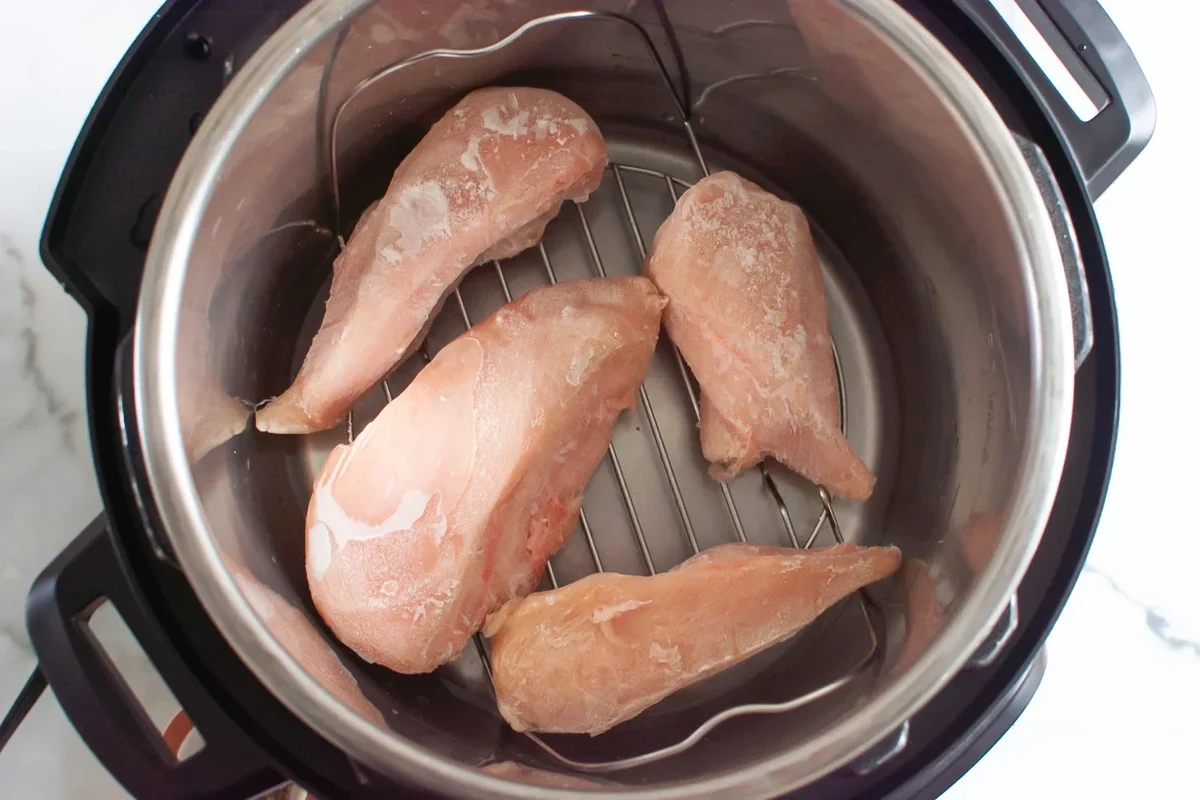
To prevent the dreaded “Burn” notice, you must have enough thin liquid—such as broth, water, or juice—at the bottom of the inner pot. A minimum of one cup of liquid is standard for most 6-quart models. If you are using a pot-in-pot setup, ensure your trivet is in place to keep the chicken elevated and away from direct contact with the base.
Seasoning Strategies: Flavoring Frozen Chicken Without Dilution
Seasoning frozen meat can be tricky because the ice prevents spices from adhering. Instead of dry rubs alone, consider adding aromatics like garlic, onion, or fresh herbs into the cooking liquid. You can also apply a glaze or a spice blend after the pressure cycle is complete, which often results in a more vibrant flavor profile.
Avoid using thick sauces like heavy barbecue or cream-based sauces during the initial pressure cycle. They tend to settle at the bottom and trigger the heat sensor, leading to a “Burn” error.
Step-by-Step Technique: From Freezer to Table
Ensuring Even Cooking: The Importance of Breast Size and Thickness
Not all chicken breasts are created equal. Large, thick breasts will naturally require more time than thin, tenderized cutlets. If you have a mixture of sizes, try to arrange them so the thickest parts are facing outward toward the edges of the pot, where the heat circulation is often most intense.
Food Safety Guidelines: Avoiding Pitfalls
Internal Temperature Requirements and Resting Periods
According to the USDA, all poultry must reach an internal temperature of 165°F (74°C) to be considered safe to consume. Always use a digital meat thermometer to verify the thickest part of the breast before serving. Resting the meat for five minutes after cooking also allows the juices to redistribute, leading to a better texture.
Never rely on cook time alone to judge doneness. If the center of your chicken is still below 165°F, return the lid to the pot and cook for an additional 2–3 minutes at pressure.
Troubleshooting and Refining Your Results
Texture Adjustments: Why Shredding vs. Slicing Matters
Pressure-cooked chicken is often best served shredded, as the fibers become very tender. If you prefer neat, clean slices, you must be careful not to overcook the meat, as it can turn “chalky” if left under pressure for too long. If you find your results are too dry, check your best spices for chicken and consider using a fattier cut or a slightly shorter cook time next time.
Storage, Reheating, and Meal Prep Efficiency
Best Practices for Storing Leftover Instant Pot Chicken
Store your cooked chicken in an airtight container in the refrigerator for up to three to four days. If you have a large batch, portion it out immediately after cooling to ensure it stays fresh. Properly stored chicken can also be frozen again once it has been fully cooked, though the texture may change slightly upon thawing.
How to Reheat Without Drying Out Your Protein
Reheating in the microwave often zaps the moisture out of chicken. To keep it succulent, add a tablespoon of broth or water to the container before heating, or use a low-heat setting on your stovetop. This simple trick helps maintain the quality of your meal prep efforts.
Is This Method Right for Your Kitchen?
The value of this method lies in its pure convenience. While traditional roasting or grilling may offer a superior texture or crispy skin, the pressure cooker is unmatched for speed and hands-off reliability. If you are a parent or a busy professional, this technique is an essential tool in your culinary arsenal for 2026 and beyond.
Prefer the stovetop? See how long to boil chicken tenders.
Cooking frozen chicken breast in an Instant Pot is a reliable, time-saving method perfect for soups, salads, and shredded chicken dishes. While it won’t replace the sear of a grill, its consistency and safety make it a staple technique for any home cook looking to save time without sacrificing food safety.
Common Questions
No, this method is specifically designed for chicken taken directly from the freezer.
This usually means there isn’t enough liquid at the bottom of the pot; add more broth or water next time.
Bone-in chicken requires a longer cooking time, typically 20–25 minutes, to ensure the meat near the bone is fully cooked.
Yes, thicker breasts take longer to cook than thin, uniform fillets.
A trivet helps elevate the chicken, allowing for better steam circulation and preventing the meat from sticking to the bottom.
Frequently Asked Questions
Frozen chicken breasts typically take 10 to 15 minutes on High Pressure, depending on their size and thickness. Always allow for a 10-minute natural release to ensure tenderness.
Yes, you must add at least one cup of liquid, such as water or broth, to the bottom of the pot to generate steam and prevent a burn error.
Yes, pressure cooking is a safe way to cook frozen chicken as long as it reaches a minimum internal temperature of 165°F (74°C).
Chicken often becomes tough if it is overcooked or if the pressure release is too fast. Try reducing the cook time slightly or ensuring you use a natural release.
You can, but dry rubs often don’t stick well to frozen meat. It is usually more effective to season the liquid or add spices after the cooking cycle is complete.
Store leftover chicken in an airtight container in the refrigerator for up to four days. Reheat with a splash of liquid to prevent it from drying out.