Belizean Coconut Rice Recipe: Authentic, Creamy, and Fluffy (The Real Method)

Why trust this recipe?
This method was learned firsthand in a Belizean home in Dangriga — cooked alongside the family, getting it wrong, and working out exactly why. The details here aren’t pulled from a general recipe template. They come from the specific corrections that turned mediocre rice into the dish it’s supposed to be.
Belizean coconut rice sits at the center of the country’s home cooking. It shows up at Sunday dinners, on plates alongside Belizean curry chicken, and as the quiet base that makes bold stews and seasoned fish taste complete. Despite how frequently it’s made, most recipes online miss the details that actually matter.
The first time I made it, I used full heat, used too much coconut milk, and lifted the lid twice during cooking. The result was dense, slightly gummy rice with a scorched layer at the bottom. That failure made the principles clear in a way that following instructions never quite does.
This guide covers the full method — including liquid ratios, the heat sequence, what the rice should look and smell like at each stage, and how to fix it when something goes wrong.
In This Guide:
What Makes Belizean Coconut Rice Different From Other Coconut Rice
Coconut rice appears across Caribbean, South Asian, and West African cooking. Each version reflects regional preferences. The Belizean style occupies a specific middle ground: lighter than Thai sticky coconut rice, more fragrant than plain steamed white rice, and notably less sweet than some Caribbean versions.
The Liquid Is Always Blended
Pure coconut milk produces dense, heavy rice that borders on gluey. In Belizean home cooking, the liquid is split between full-fat coconut milk and plain water. The coconut milk provides the creaminess and fragrance; the water keeps the texture light and the grains separate. This ratio is the single most important variable in the recipe.
It Exists to Balance, Not to Star
Belizean coconut rice is built as a pairing dish. It should have a clear coconut presence without dominating whatever it’s served alongside. If the rice is the first thing you smell when the plate arrives, the balance is off. Whether it’s sitting next to Belizean BBQ chicken or a bold black bean stew, the rice should complement and balance — not compete.
Grain Texture Is the Target
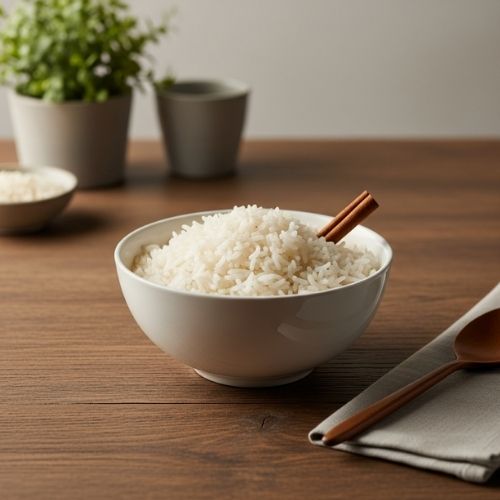
Properly made Belizean coconut rice has separate, fully cooked grains with a slight sheen from the coconut fat. Each grain holds its shape when spooned. If they’re fusing or collapsing into each other, either the ratio or the heat was wrong — both correctable issues covered in the troubleshooting section below.
Ingredients for Belizean Coconut Rice
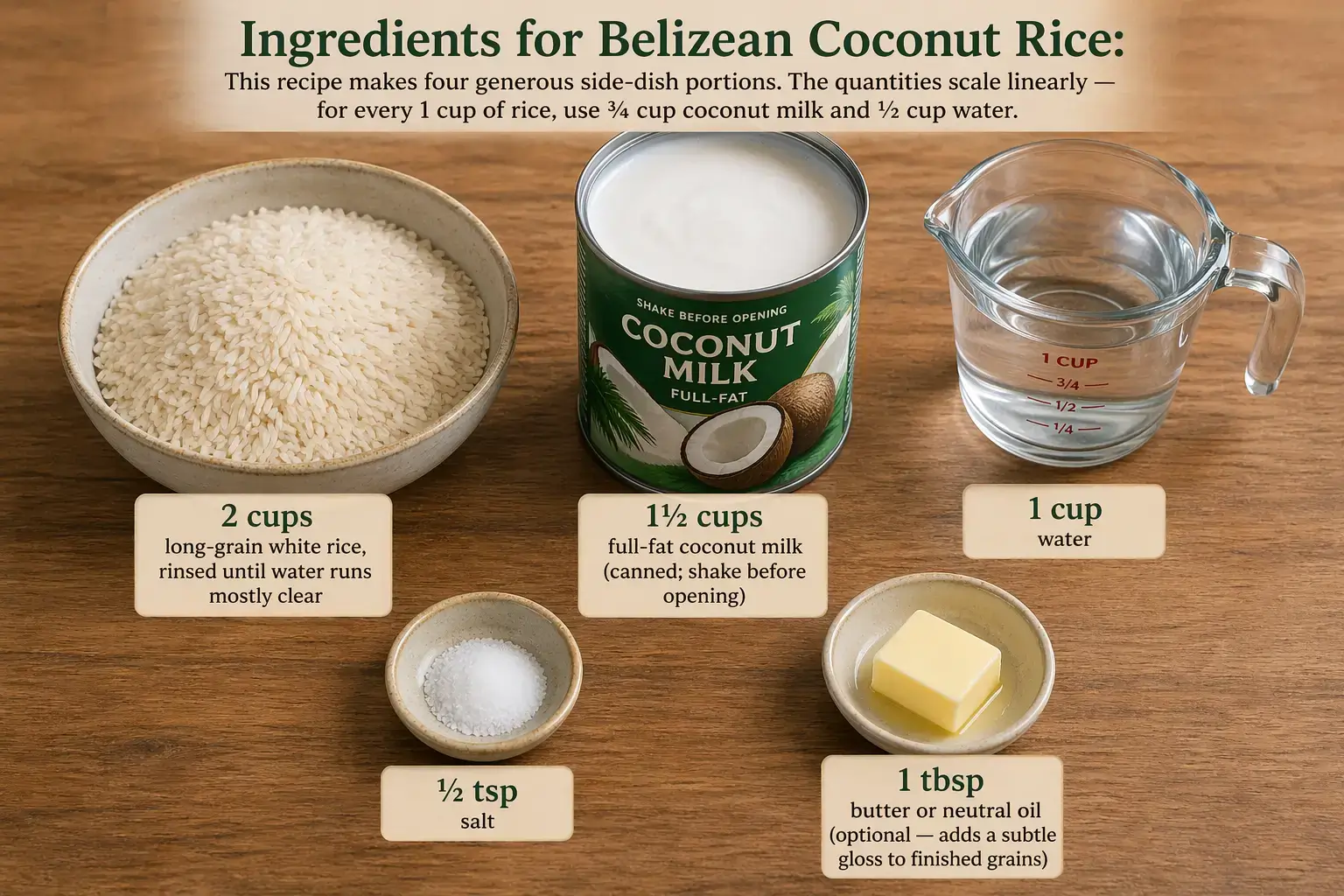
This recipe makes four generous side-dish portions. The quantities scale linearly — for every 1 cup of rice, use ¾ cup coconut milk and ½ cup water.
- 2 cups long-grain white rice, rinsed until water runs mostly clear
- 1½ cupsfull-fat coconut milk (canned; shake before opening)
- 1 cup of water
- ½ tsp salt
- 1 tbsp butter or neutral oil (optional — adds a subtle gloss to finished grains)
Recipe Summary
Prep: 5 min | Cook: 18–20 min
Rest: 8 min | Total: 33 min
Serves: 4 (side dish)
Cuisine: Belizean / Caribbean | Calories: 230 per serving
Ingredient Notes
Why Long-Grain Rice Specifically
Long-grain varieties — standard long-grain white, jasmine, or basmati — have lower starch content than short or medium-grain rice. Lower starch means grains stay separate after cooking instead of fusing. Short-grain rice cooked in coconut milk produces a sticky, dense result closer to rice pudding than a side dish. Use long-grain every time.
Full-Fat vs. Light Coconut Milk
Full-fat is strongly recommended. Light coconut milk has been diluted and lacks the fat content that gives the rice its characteristic light creaminess. If your full-fat coconut milk has separated in the can (common in colder climates), stir or shake it thoroughly before measuring — you want an even mix of cream and liquid, not a lump of fat.
Tip: If a particular brand of coconut milk feels extremely thick — almost paste-like — add an extra 2 tablespoons of water to the pot. Overly concentrated coconut milk can cause uneven cooking, even at the right nominal ratio.
How to Make Belizean Coconut Rice: Step-by-Step
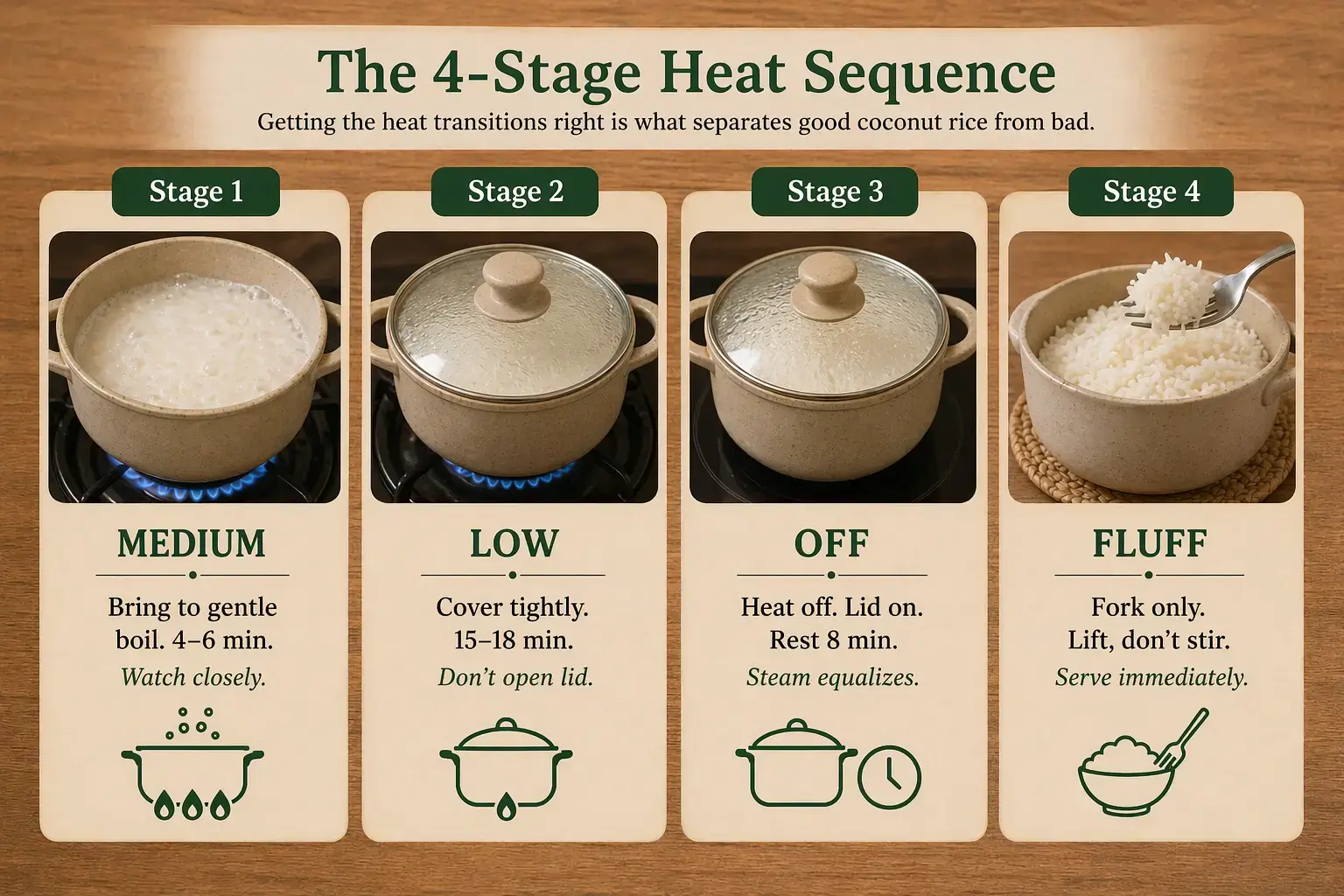
Each step in this sequence sets up the next. The most common failures happen when steps are reordered or skipped — particularly the rinse, the heat transition, and the rest period.
- Rinse the rice until the water runs mostly clear.
Place rice in a strainer or bowl under cold running water. Swirl with your hand and keep rinsing until the water runs mostly clear — not clear, but no longer milky white. This removes the excess surface starch that causes grains to clump. It takes about 90 seconds and directly affects the final texture. - Combine rice, coconut milk, water, and salt in a heavy pot.
Use a pot with a tight-fitting lid and a reasonably heavy base — thin-bottomed pots create hot spots that scorch the bottom before the top layer finishes. Add all ingredients and stir once gently. The mixture should look thin and slightly cloudy. If it looks like cream, there’s too much coconut milk. - Bring to a gentle, steady boil over medium heat.
Medium heat only — not high. You’re looking for small, steady bubbles rising consistently. A violent rolling boil drives off liquid too fast and cooks the bottom layer before the top. Stay close; this takes 4–6 minutes depending on your stove. Watch for: Big, splashing bubbles = too hot. Reduce immediately. Gentle, consistent bubbling = correct. This distinction matters for the bottom layer of rice. - Reduce to the lowest heat setting and cover tightly.
The moment you see a steady boil, turn the heat to low and cover with a tight lid. From here, steam does the cooking. Set a timer for 15 minutes (gas) or 18 minutes (electric) and do not adjust the heat again. - Do not open the lid during cooking.
This is the step most people break. Opening the lid releases steam pressure, causing uneven cooking — patches of undercooked rice next to overcooked sections. Leave it alone for the full cooking time. - Turn off the heat and rest for 8 minutes — lid still on.
Residual steam inside the covered pot continues cooking the top layer and allows moisture to redistribute evenly. Rice plated immediately is noticeably wetter and denser than rice that has rested. Eight minutes is not an approximation — it makes a real difference. - Fluff with a fork and serve.
Remove the lid. If using butter, add it now and let it melt over the surface for 30 seconds. Use a fork — not a spoon — and lift from the bottom with light, separating strokes. You’re aerating, not stirring. Serve immediately.
How to Know Your Coconut Rice Turned Out Right
Before plating, run through this quick check:
| What to Check | What You Should See | What Went Wrong If Not |
|---|---|---|
| Grain separation | Individual, non-fused grains | Too much coconut milk or skipped rinse |
| Moisture level | Tender but not wet or sticky | The lid opened early, or the rest step was skipped |
| Bottom of the pot | Clean, or very light golden crust | Scorched = the heat was too high |
| Aroma | Lightly sweet, faint nuttiness | Overpowering = too much coconut milk |
| Sheen | Slight gloss on grains | Dull and dry = insufficient coconut milk |
On the crust: A very thin layer of slightly firmer rice at the pot bottom is normal and actually desirable in Belizean home cooking — similar to the Persian tahdig or socarrat in paella. It becomes a problem only if it smells burnt. Scoop from the top and sides to serve the fluffy portion; the crust can be eaten separately or discarded.
The Most Common Mistakes (And Why They Happen)

Infographic: The 4 mistakes most commonly behind bad coconut rice — and the specific fix for each.
Using Too Much Coconut Milk
More coconut milk does not mean more flavor. Beyond the correct ratio, the fat content actively interferes with how the rice absorbs liquid — the grains swell unevenly, and the result is dense and slightly greasy. The 1½ cups milk to 1 cup water ratio for 2 cups of rice is specific for a reason. Adjust it only after you’ve made it correctly and understand what you’re changing.
Cooking on High Heat
Coconut milk contains natural sugars and fat, both of which scorch faster than plain water. High heat from the start creates a burnt layer at the pot bottom while the rice above it is still raw. Medium heat gives you control and prevents scorching. The drop to low heat after the boil is what drives the steam cooking phase.
Skipping the Rinse
Surface starch causes grains to fuse together. It takes 90 seconds to rinse it off. There is no substitute for this step and no way to fix its absence after cooking.
Opening the Lid
Steam pressure and consistent temperature are doing the cooking after the heat drops. Every time the lid comes off, heat and steam escape unevenly. The rice on top — which relies on steam from below — suffers most. Set a timer and leave it.
Skipping the Rest Period
This is the step that seems optional, but isn’t. The eight minutes off-heat with the lid on allows the steam inside to finish cooking the upper grains and for all moisture to equalize. Rice served immediately off the heat is consistently wetter and denser than rice that has rested. It makes a noticeable difference on the plate.
What to Serve With Belizean Coconut Rice
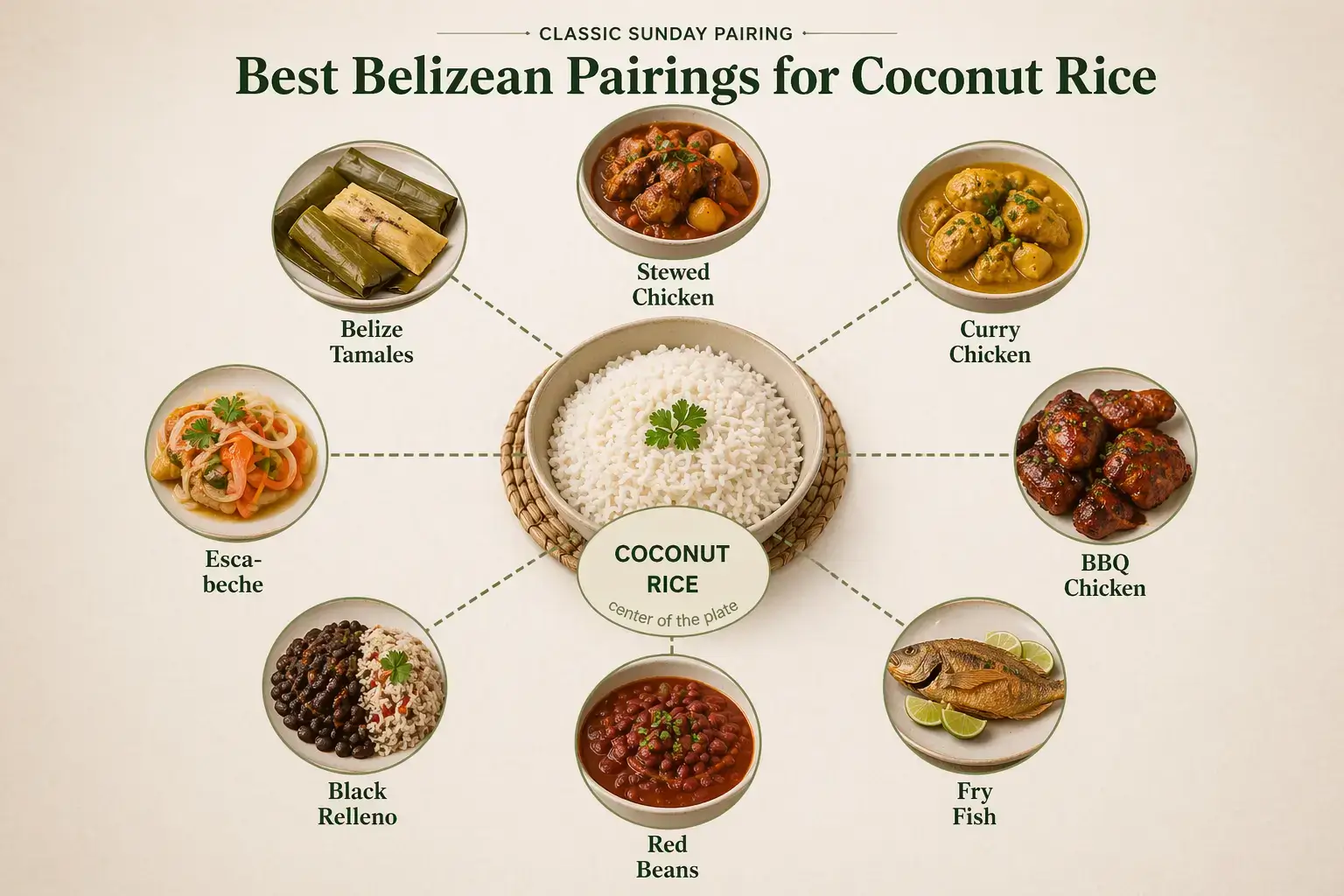
Coconut rice is a pairing dish — its mild creaminess and subtle sweetness exist to balance bolder, spicier, or more savory mains. Below are the most natural pairings from Belizean home cooking.
Classic Belizean Pairings:
Curry Chicken — the creamy rice absorbs the curry sauce well. This is one of the more natural pairings on the table. The full recipe for Belizean curry chicken pairs directly with this coconut rice method — same cooking philosophy, different protein.
Stewed Chicken — the standard Sunday pairing across Belizean households. The slight sweetness of the coconut rice works against the deep, savory stew gravy.
BBQ Chicken — the smoke and char of Belizean BBQ chicken pairs well with the mild creaminess of coconut rice. The contrast in flavor profiles makes this a strong combination for outdoor meals.
Red Beans — the traditional rice-and-beans combination, one of Belize’s most iconic dishes. When served together, the bean broth is typically stirred through the rice before the lid goes on. See the Coconut Rice and Beans variation below.
Black Relleno — the richness of Belizean black relleno needs something plain alongside it. Coconut rice is a quieter base than plain white rice, which makes it a better match for something that bold.
Fry Fish — particularly snapper or grouper. The coconut note complements the seasoned crust without fighting the delicate fish flavor underneath.
Looking for side dishes to complete the plate?
- Belize Potato Salad — a creamy, colorful addition for larger family meals
- Belizean Flour Tortillas — soft, freshly made tortillas round out any Belizean spread
- Belizean Tamales — a traditional dish that pairs well at Sunday gatherings alongside the rice
Authentic Belizean Variations
These are adjustments made in actual Belizean kitchens — not modern additions, but small adaptations based on what’s available, who’s at the table, and what the main dish is.
Coconut Rice and Beans
Cook red kidney beans separately until tender, reserving some of the bean broth. Before covering the rice for the steam phase, stir the beans and a generous splash of bean broth directly into the pot. The broth adds earthy depth and makes this a complete, filling dish on its own — the classic Belizean plate that shows up at Sunday gatherings alongside Belizean chicken dishes and stewed meats.
Savory Herb Version
Add two crushed garlic cloves and two sprigs of fresh thyme to the pot along with the liquids. Remove the thyme before serving. This version has a savory, aromatic edge that pairs particularly well with fish and seafood.
Sautéed Onion Base
Before adding the liquids, sauté half a diced white onion in a tablespoon of oil over medium heat until soft and translucent — about four minutes. Add the liquids and rice directly to the same pot. The onion flavor becomes subtle and slightly sweet during cooking, adding a layer of depth without changing the character of the dish.
Mild Version for Children
Adjust the ratio to equal parts coconut milk and water — 1¼ cups each per 2 cups rice — for a gentler coconut presence. Skip aromatics entirely. The result is soft, mildly sweet rice that works alongside simple proteins without overwhelming younger palates.
Caribbean Herb Twist
Add a pinch of allspice and two sprigs of thyme to the pot. This shifts the flavor slightly toward broader Caribbean cooking — still grounded in the same technique, with a different aroma profile. Works well alongside chicken papaya curry or other spiced dishes.
Storing and Reheating Leftover Coconut Rice
Refrigerator
Let the rice cool at room temperature for no longer than an hour before transferring to an airtight container. Refrigerate for up to three days. Coconut rice firms noticeably when cold because the coconut fat solidifies — this is normal and reverses completely when reheated correctly.
Reheating
Add one to two tablespoons of water to the container before reheating. Cover loosely and microwave in 60-second intervals, stirring between each, until heated through. Alternatively, reheat in a small covered pot over low heat with a splash of water and a tight lid. Avoid high heat — it dries the grains out quickly and can cause the coconut fats to separate from the rice.
Freezing
Coconut rice freezes well for up to two months. Portion into freezer bags, press flat, and freeze. Thaw overnight in the refrigerator and reheat as above with the addition of water. Texture holds well through a single freeze-thaw cycle.
Troubleshooting: What to Do When Something Goes Wrong
Rice Is Too Wet After the Rest Period
Remove the lid and leave the uncovered pot on the lowest possible heat for three to four minutes. Alternatively, drape a clean kitchen towel over the pot opening and replace the lid — the towel absorbs excess steam without releasing heat. The rice firms up within a few minutes.
Rice Is Dry or Undercooked in Patches
Add two tablespoons of warm water, replace the lid, and return to low heat for five minutes. Don’t stir. Let the steam redistribute through the pot. Patchy undercooking on the top layer, specifically, is almost always caused by the lid being opened during the steam phase.
Burnt Smell From the Bottom
Stop cooking immediately. Scoop from the top and middle of the pot and serve that portion. Do not stir — stirring spreads the burnt flavor through the rest of the rice. For future batches, reduce the heat more aggressively after the boil, or place a heat diffuser under the pot if using a gas stove.
Rice Is Sticky and Dense Despite Following the Recipe
The two most likely causes: the coconut milk brand was significantly thicker than standard (some canned brands vary widely), or the rice variety was shorter-grain than labeled. For the next batch, add an extra 2 tablespoons of water and confirm you have genuine long-grain rice. This batch can still be used — sticky rice works well alongside dishes where you want the rice to absorb sauce, like Belizean black soup.
Frequently Asked Questions
Can I use brown rice instead of white?
Yes, with adjustments. Brown rice needs roughly 50% more liquid and close to double the cooking time — plan for 40 to 45 minutes of covered steam after the boil. Increase the water to 1½ cups while keeping the coconut milk the same. Add five minutes to the rest period. The texture will be chewier and the coconut aroma slightly more muted, but the method works.
Can I use light coconut milk?
Yes. The rice will be noticeably less creamy, and the coconut flavor milder. If dietary needs require lower fat, light coconut milk is a functional substitute — just understand that the defining quality of the dish, the light creaminess, is reduced proportionally to how much the coconut milk has been diluted.
Can I make this in a rice cooker?
Yes. Use the standard white rice setting. Replace the water in your rice cooker’s standard ratio with the coconut milk and water blend from this recipe. Add salt. The machine handles the heat transition automatically. Results vary slightly by model but are consistently good for plain coconut rice. The bean variation doesn’t adapt as cleanly to a rice cooker.
Why does my rice stick to the bottom of the pot every time?
The two most common causes: the heat stayed too high after the initial boil, or the coconut milk was unusually concentrated. A heavy-bottomed pot also helps distribute heat more evenly and prevents hot spots. Try a lower setting and a thin layer of oil or butter at the bottom of the pot before adding the liquids.
Can I add other flavors — garlic, scallion, allspice — during cooking?
Yes. Add aromatics whole or in large pieces so they’re easy to locate and remove before serving. Avoid anything with high water content, like fresh tomatoes or fresh coconut meat — both disrupt the liquid ratio and can make the cooking time unpredictable.
Does this recipe scale up easily?
Yes, linearly. For every 1 cup of rice: ¾ cup coconut milk + ½ cup water. Cooking time stays roughly the same for up to 4 cups of rice. Beyond that, use a wider, heavier pot to ensure even heat distribution through the larger volume of rice and liquid.
What’s the difference between Belizean coconut rice and rice and beans?
Plain coconut rice uses only the coconut milk and water base with no additional ingredients beyond salt and optional aromatics. Rice and beans are a specific Belizean dish where cooked red or black beans and bean broth are incorporated into the rice before or during the steaming phase.
The two dishes have distinct textures, flavors, and cultural contexts — though they start from the same technique. If you’re building a full Belizean meal, consider pairing this coconut rice with Belizean fry jacks as a starter or alongside the main.
Final Thoughts
Belizean coconut rice is not complicated — but it requires specific attention to a few things that most generic recipes gloss over: the liquid ratio, the heat transition from medium to low, and the rest period at the end. Get those right, and the dish comes out well. Ignore them, and it doesn’t matter what else you do.
The first few times, follow the ratios and steps precisely. Once you’ve made it correctly two or three times and understand how the rice should look, smell, and feel at each stage, the adjustments become natural, and the recipe becomes something you know rather than something you follow.

Belizean Coconut Rice Recipe
Ingredients
Equipment
Method
- Wash the rice under cool water until the water turns clear.
- Set a pot on low heat and warm it slowly.
- Pour in the coconut milk and water, then stir once.
- Add the washed rice and sprinkle in the salt.
- Stir lightly one time to keep the flavor clean.
- Raise heat to medium and let the pot reach one full boil.
- Reduce heat to low, cover with a tight lid, and steam for 15–18 minutes.
- Do not lift the lid or stir during cooking.
- Turn off heat, rest the rice for 5 minutes, then fluff gently with a fork.
Video
Notes
- For softer rice, keep the heat low and let it steam fully.
- If the rice is too wet, rest uncovered for a few minutes.
- If the rice is dry, add 1 tablespoon warm water and steam briefly.
- This base works for Belizean coconut rice and beans or a mild coconut white rice for kids.